Having oily hair just a few hours after shampooing is a frustrating situation, but rarely linked to a lack of hygiene. In the vast majority of cases, this phenomenon is explained by an excessive production of sebum on the scalp. Understanding this mechanism is the first step to adopting the right habits - and avoiding mistakes that worsen the problem.
Oily hair: causes, effective solutions and grandmother's remedies (what really works)
Jul 20, 2026

Having oily hair just a few hours after shampooing is a frustrating situation, but rarely linked to a lack of hygiene. In the vast majority of cases, this phenomenon is explained by excessive sebum production on the scalp. Understanding this mechanism is the first step to adopting the right habits – and avoiding mistakes that worsen the problem.
Why do we get oily hair?
The scalp naturally produces sebum to protect and moisturize the skin and hair. In some people, this production is higher due to several factors:
- stress;
- hormonal variations;
- genetics;
- certain medications;
- dermatological conditions such as seborrheic dermatitis.
To treat oily hair, the goal is not to "strip" the hair with aggressive products to dry it out at all costs, but rather to gently rebalance the scalp.
Solutions that actually work
1. Choose a suitable shampoo
A gentle shampoo, formulated for oily hair or frequent use, is the basis of an effective routine. Conversely, an overly aggressive shampoo can have the opposite effect: the irritated scalp defends itself by producing even more sebum.
What exactly is a gentle shampoo?
A gentle shampoo is a shampoo formulated to cleanse the scalp and hair without attacking the skin barrier. Specifically, it generally is:
- Sulfate-free (SLS – Sodium Lauryl Sulfate, SLES – Sodium Laureth Sulfate): these are highly foaming but very harsh cleansing agents that strip the scalp's protective hydrolipidic film.
- Silicone-free: silicones (often identifiable by the suffixes -cone, -conol, -siloxane in the INCI list) coat the hair fiber and can, in the long run, weigh down the roots and create a flattened effect that visually accentuates the oily appearance.
- Free of harsh chemical surfactants: prefer gentle plant-derived cleansing agents, such as glucoside surfactants (coco-glucoside, decyl glucoside) or betaines (cocamidopropyl betaine in low concentration), which are less irritating to the scalp.
- Paraben-free: controversial preservatives, often avoided in so-called "gentle" formulations, although their direct link to oily hair has not been demonstrated.
- Free of excessive synthetic fragrances and colorants: these additives have no cleansing role and can cause irritation or sensitization of the scalp in sensitive individuals.
- With a pH close to that of the scalp (ideally between 5 and 5.5): a too alkaline pH weakens the protective film and can deregulate sebum production.
In summary, a gentle shampoo prioritizes effective but respectful cleansing, rather than intense and stripping cleansing. It is this "gentle" approach that breaks the vicious cycle where overly aggressive washing leads to an overproduction of sebum in reaction.
Practical tip: to check if a shampoo is really gentle, consult the INCI list (ingredients) on the packaging. The first ingredients (the most concentrated) should ideally be gentle surfactants rather than sodium laureth sulfate.
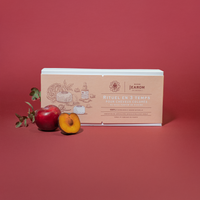
Our Maison Jearom 3-step ritual combines targeted action against oily hair, a natural and ultra-gentle formula, and an adapted pH of 4.5/5.5. Silicone-free, paraben-free, sulfate-free.
Gentle shampoo and natural shampoo: beware of confusion
"Gentle" and "natural" are two distinct concepts, often confused. These two criteria do not necessarily overlap:
- A 100% natural shampoo can be irritating. This is the case with some saponified soaps (like liquid Marseille soap), whose very alkaline pH (around 9-10) strips the scalp's protective film.
- A shampoo of partially synthetic origin can be very gentle. Glucoside surfactants (coco-glucoside, decyl glucoside), for example, are obtained by chemical transformation of plant materials, but are among the least aggressive cleansing agents available.
The word "natural" or the "organic" label on packaging is therefore not a guarantee of gentleness for the scalp. The only reliable way to know if a shampoo is truly gentle is to check its INCI list and, if available, its pH.
2. Adjust washing frequency
Contrary to popular belief, washing your hair often does not automatically make it greasier. If the scalp produces a lot of sebum, it is entirely possible, and recommended, to wash your hair as soon as it needs it, provided you use a gentle and well-suited shampoo.
3. Avoid certain habits that worsen the problem
- Touching your hair frequently throughout the day.
- Excessively brushing the roots, which distributes sebum along the entire length.
- Applying conditioner, oils, or masks directly to the scalp: these treatments should be reserved for lengths and ends.
4. Use dry shampoo sparingly
Dry shampoo is useful for temporarily absorbing excess sebum, especially in a pinch. However, it is not a long-term treatment and should not replace regular washing.
5. Do not neglect underlying causes
If the problem persists despite an adapted routine, it may be linked to deeper factors: chronic stress, hormonal imbalance, genetic predisposition, or a scalp condition.
Grandma's remedies for oily hair: fact vs. fiction
Many natural solutions circulate. Here's a clear look at their actual effectiveness.
Apple cider vinegar
Advantages: used as a well-diluted rinse, it can remove some styling product residues and add shine. Limitations: it does not act on sebum production itself, and overly concentrated use can irritate the scalp. Verdict: acceptable as a diluted rinse, but limited effect on the root cause.
Green clay
Advantages: used as a scalp mask, it effectively absorbs excess sebum. Limitations: the effect is temporary, and too frequent use can dry out or irritate the skin. Verdict: quite useful, for occasional use.
Lemon
Often presented as a natural purifier, lemon can actually irritate the scalp and has not shown a lasting effect on oily hair. It is not particularly recommended.
Talc or cornstarch
"Homemade" versions of dry shampoo, these powders absorb oil on the surface but offer only a cosmetic and temporary effect, without addressing the cause.
Essential oils (peppermint, tea tree, rosemary…)
Scientific evidence of their effectiveness against oily hair remains limited, and improper use can cause irritation or allergic reactions. Caution is advised.
Misconceptions to abandon
- "You must space out shampoos at all costs to re-educate your hair": this belief is based on weak scientific evidence.
- "Oily hair is due to a lack of hygiene": this is false, the cause is most often physiological.
- "Lemon or vinegar stop sebum production": none of these remedies act on sebum production itself.
When to consult a dermatologist?
Certain signs should prompt a consultation:
- hair becomes greasy only a few hours after washing;
- persistent itching;
- redness or patches on the scalp;
- significant dandruff.
These symptoms may suggest seborrheic dermatitis or another scalp condition requiring medical advice.
In summary
Grandma's remedies can temporarily improve the appearance of oily hair, but none act deeply on sebum production. The most reliable solutions remain:
- a gentle shampoo, suitable for frequent use like all of our Maison Jearom shampoos.
- a washing frequency adjusted to the actual needs of the scalp;
- good habits (avoiding excessive touching/brushing of hair);
- dermatological advice in case of persistent or unusual symptoms.